Climate talks shift to energy bills and security, as leaders say fossil fuels are the problem
As world leaders arrive in Antalya, the message from the COP31 stage is that cheaper, more secure energy means moving away from coal, oil and gas. But not everyone agrees on what that should look like.
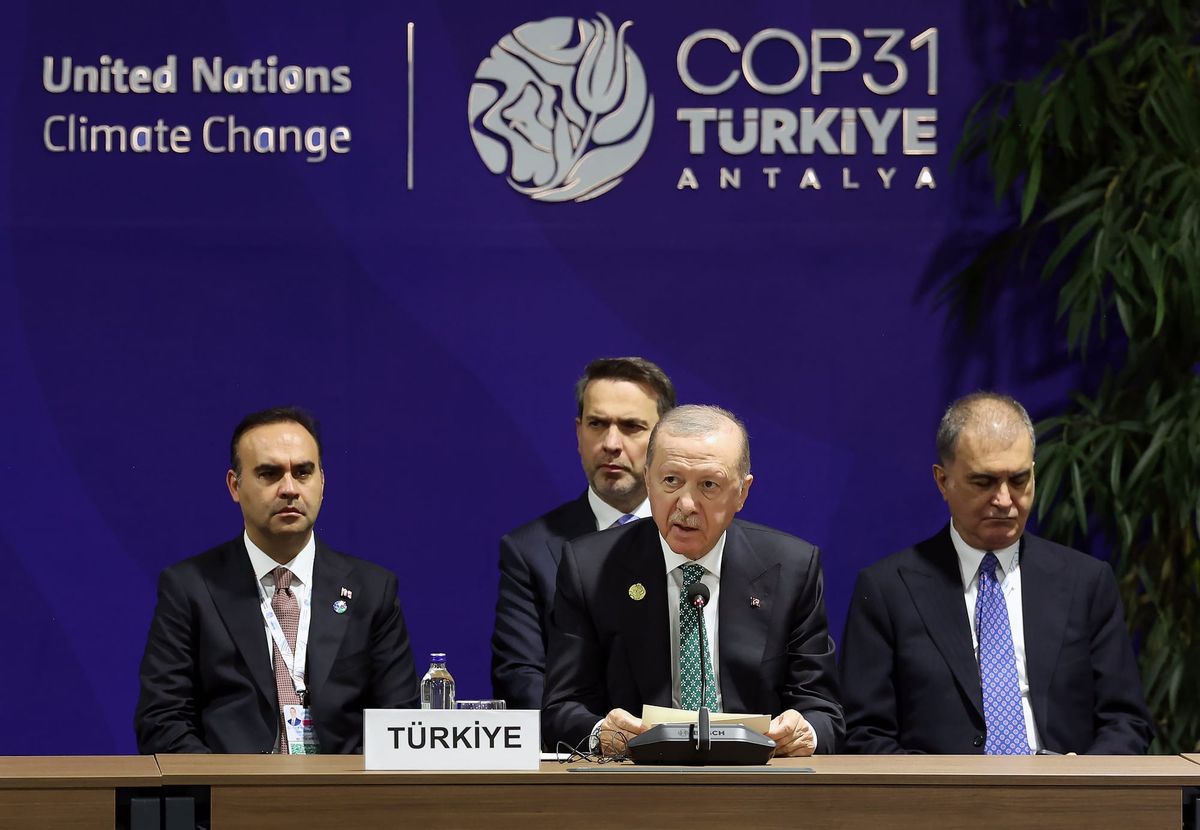

World leaders at the UN climate talks in Antalya have put energy security and the cost of living at the centre of the summit.
Opening the leaders’ summit, UN Secretary-General António Guterres said:
“Three-quarters of humanity live in countries that import fossil fuels. Hostage to price shocks they did not create and they cannot control.”
“Fossil fuels must go the way of the dinosaurs. But that won’t happen on its own. The dinosaurs did not have a lobby. But fossil fuels do.”
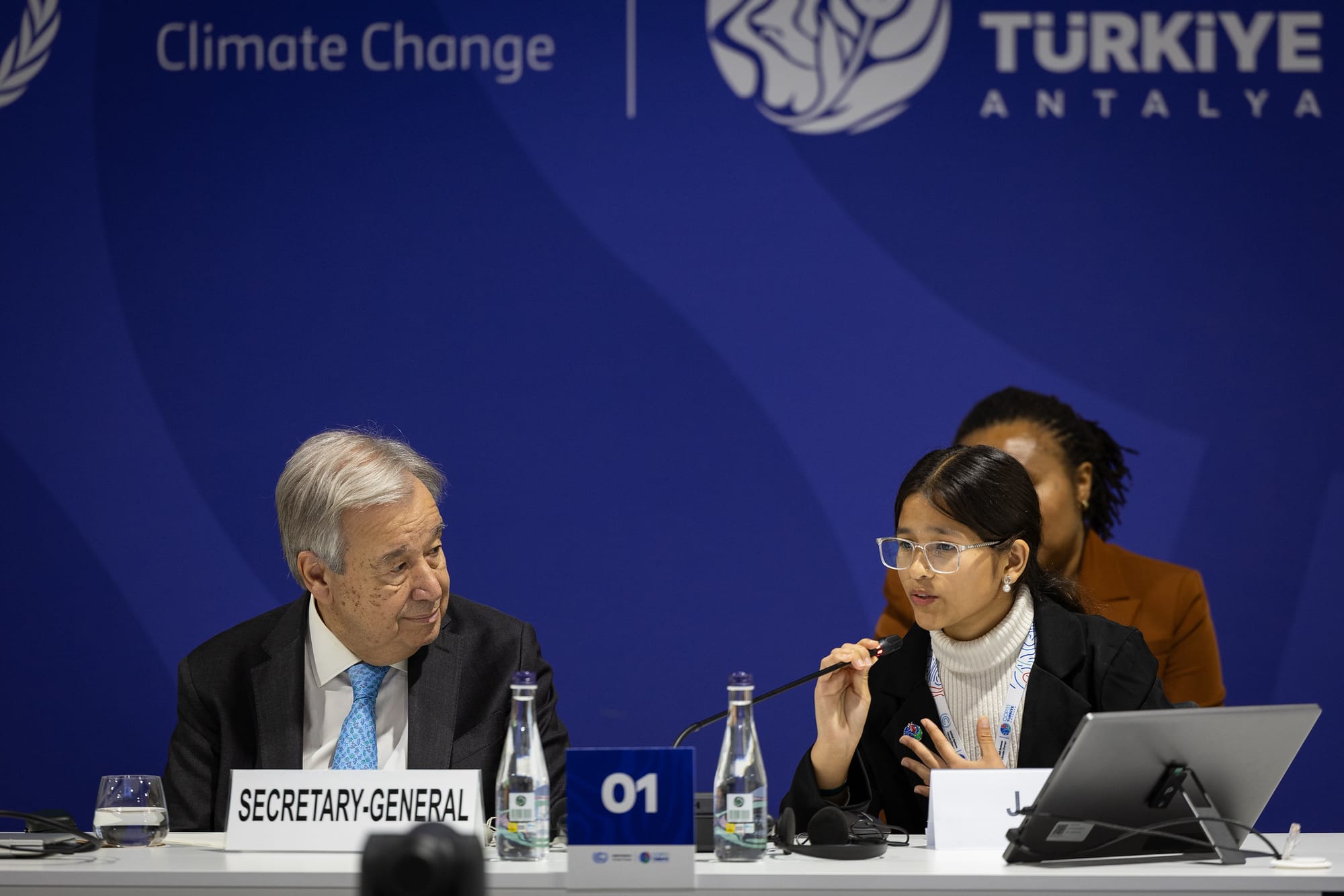
Guterres, who steps down at the end of the year, called for windfall taxes on oil companies:
“In the last quarter alone, the nine largest oil companies pocketed $95 billion in profits. Meanwhile, the Loss and Damage Fund has received around $600 million. That is what these companies made in about 14 hours.”
The UN’s climate chief, Simon Stiell, told leaders:
“Today, chaos in global energy markets and climate disasters are supercharging inflation: slamming government budgets, pushing household bills up and living standards down. The political costs of fossil fuel dependency are unforgiving.”
The push to go electric
The COP31 hosts want electricity to make up 35% of the world’s energy by 2035, up from about a fifth today. It’s known as the “35 by 35” pledge.
“First, it’s clear we must electrify the world. We must lift electricity from a fifth of our energy systems to a third," said Chris Bowen, Australia’s climate minister and COP31 President of Negotiations.
According to Carbon Brief, 15 countries have signed the pledge so far, with another 32 signalling support. The UK and the EU have not formally signed.
The UK has however signalled its support.
“The UK is strongly supportive of clean electrification," said the UK’s climate minister, Katie White.
Helen Clarkson, chief executive of the Climate Group, said:
“Lower energy bills, cleaner air, cheaper to drive cars – electrification delivers, and people and businesses are ready for it. But even though electrification can deliver some of the fastest economic and climate gains available, several governments haven’t endorsed the COP Presidency’s 35% by 35 pledge yet.”
Should the power be clean?
The pledge does not say the extra electricity must come from renewables such as solar and wind.
Amos Wemanya, senior climate advisor at Power Shift Africa, told Climate Times:
“Fossil fuels have failed Africa. If this electrification initiative is to be beneficial to Africa, it has to be renewables.”
“For a continent that has hundreds of millions of people who do not have access to electricity, electrification must mean something. And that something is universal energy access, but not just lighting a bulb. It’s about powering industries.”
Others argue the switch is worth it anyway.
“Controversial opinion. Electrification doesn’t need to be clean energy powered to be worth it. That is how brilliant electric tech is, it is worthwhile anyway," Camilla Born, chief executive of Electrify Britain, wrote on LinkedIn.
Countries have just over a week left to agree a deal. A first draft is expected early next week.