'Fossil fuels have failed Africa.' The electric age must run on renewables, campaigners tell COP31
As COP31 pushes for a world that runs more on electricity, Power Shift Africa says the power must come from renewables, and that Africa needs the money to build it.
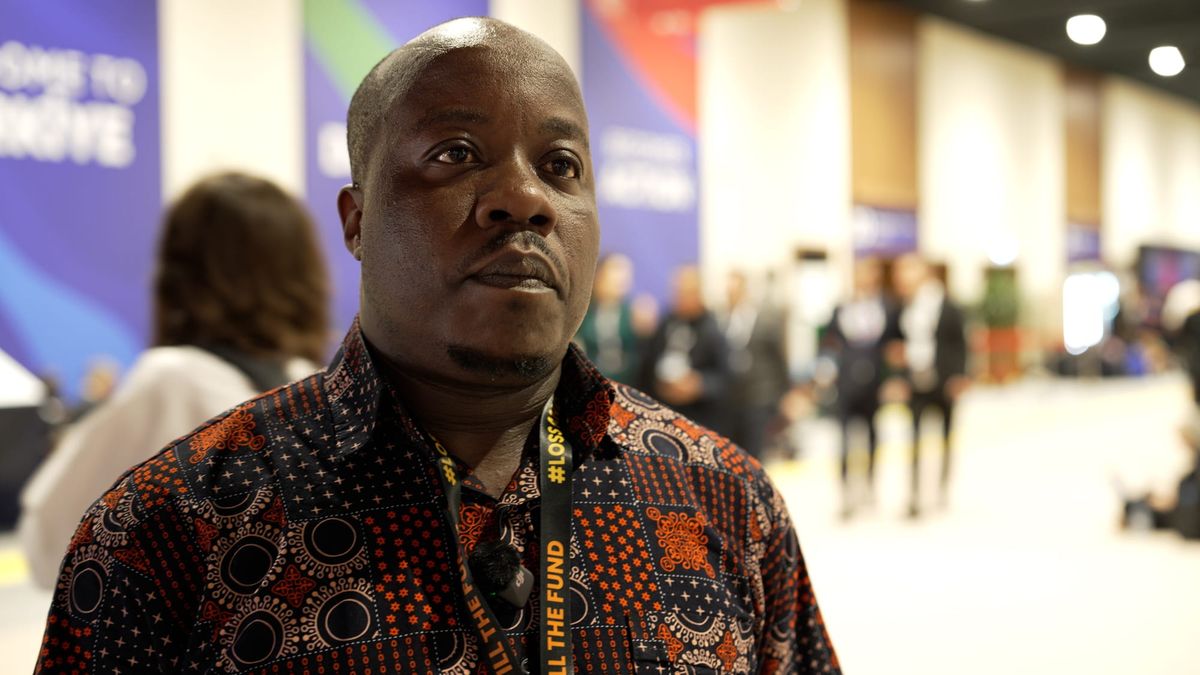

Fossil fuels should have no part in the plan to run more of the world on electricity, an African climate campaigner has told Climate Times at the COP31 climate talks in Antalya.
"Fossil fuels have failed Africa," said Amos Wemanya, a senior advisor at the Nairobi-based think tank Power Shift Africa. "If this initiative is to benefit Africa, it has to be renewables."
He was speaking about the hosts' 35 by 35 plan, which aims to raise the share of the world's energy that comes from electricity from about 23% today to 35% by 2035.
The EU, the UK and others have backed it. But the plan does not say the electricity has to be clean, and countries are still arguing over whether it should.
"Gas should not be part of this plan. It should be purely renewables, solar, wind," said Mr Wemanya.
Darragh O’Brien, Ireland’s climate minister says some flexibility such as not having a condition that the source of energy should be renewable, is needed to get every country on board. “So there has to be a pragmatism there, too,” he said.
More than a light bulb
In many rich countries, going electric mostly means switching cars and boilers from petrol and gas to electricity. Across much of Africa, hundreds of millions of people have no electricity at all, Wemanya said.
"Electrification must mean something. And that something is universal energy access, but not just lighting a bulb. It's about powering industries," he added.
The biggest hurdle is money.
Borrowing costs far more for African countries than for rich ones, which makes solar farms and power lines more expensive to build.
Africa has huge potential for wind and solar power but receives only about 2% of global investment in clean energy, according to Power Shift Africa.
Adaptation money
Power Shift Africa is also fighting a second battle at COP31: money to help communities cope with the floods, droughts and heatwaves that are already happening.
This is known as adaptation finance.
At last year's COP30 summit in Belém, governments agreed to call for efforts to at least triple adaptation finance by 2035.
At the start of COP31, the African Group of Negotiators asked for dedicated talks on how to deliver that promise.
The request was dropped after the EU objected on procedural grounds, Power Shift Africa's director Mohamed Adow wrote this week.
Without a starting figure and a timetable, Adow argued, the promise cannot be measured or enforced.
Africa needs about $70bn a year to adapt to climate change but receives around $14bn, he wrote.
More than half of what does arrive comes as loans, adding to the debts of countries that did least to cause the problem.
African governments are already paying from their own pockets. Mr Wemanya said some spend up to 12% of their budgets on adapting to climate change.
"Africa should not be left to adapt alone," he said.
Countries are still split on how to measure the tripling goal, with competing options in a draft text. The talks are due to end on Friday.