Video shows Canadian minister saying EU asked for more gas during COP31 climate talks
Canada’s climate minister says the EU has asked for more Canadian gas. She said it at the COP31 climate talks in Antalya, which are meant to be about cutting fossil fuels.
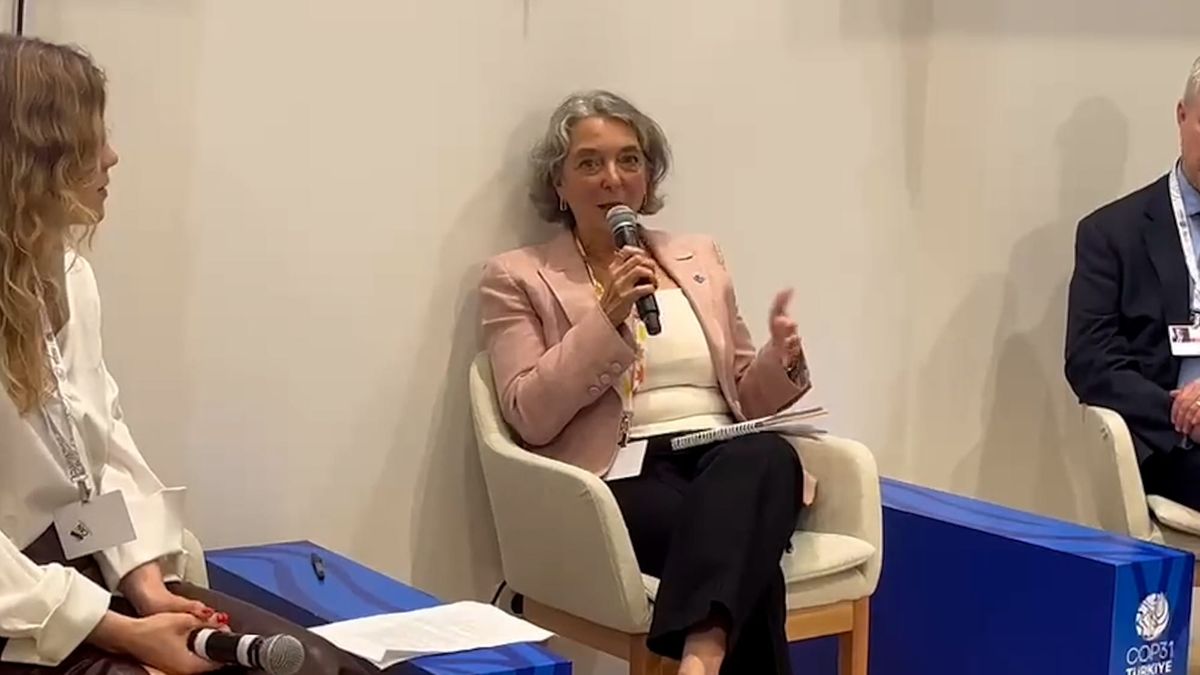

The European Union has asked Canada for more gas, according to Canada’s climate minister, in comments captured on video at a side event during the COP31 climate talks in Antalya.
In the recording, made on Saturday 14 November, Julie Dabrusin is heard telling an audience in her government’s space at the summit that she had met an EU commissioner in the past few days.
“I met with the EU commissioner just in the past few days, a conversation where they were asking for LNG because they need to have a reliable partner for their needs,” said Julie Dabrusin, Canada’s environment and climate change minister.
LNG is liquefied natural gas: gas cooled into a liquid so it can be shipped across oceans.
Climate Times asked the EU and the Canadian government for comment.
“At COP31, Minister Dabrusin engaged with several international partners to discuss a range of topics, including clean energy, climate change, nature, and oceans. The Minister met with EU Commissioner on Energy and Housing, Dan Jørgensen, to advance Canada–European Union cooperation on methane mitigation, clean energy, and electrification," said Amy Falkner, press secretary, Office of the Minister of the Environment, Climate Change, and Nature.
The EU did not respond to a request for comment.
Canada's environment minister Julie Dabrusin was filmed saying she had a meeting with the EU about a potential gas deal. Source: Tzeporah Berman
Canada’s gas boom
Canada’s gas production rose 18% between 2021 and 2025 to a record 19.1 billion cubic feet a day, according to the Canada Energy Regulator.
In June 2025, the LNG Canada terminal in British Columbia began the country’s first large-scale exports of LNG overseas.
Since Russia’s full-scale invasion of Ukraine in 2022, the EU has been looking for other countries to supply its gas.
Most of Canada’s growth comes from the Montney rock formation in British Columbia and Alberta, where gas is extracted by fracking, according to the regulator. Fracking pumps water, sand and chemicals underground at high pressure to crack open rock and release gas.
A 2024 report for the David Suzuki Foundation found fracking in the Montney has caused earthquakes felt in homes in both provinces, and that a single well now uses about 23 million litres of water.
'Ironic'
Campaigners said the timing was wrong.
“It’s ironic that EU and Canadian officials are looking into shipping gas from Canada to Europe, on the sidelines of the world’s climate summit. It’s a folly to import volatile, planet-heating fossil gas across the Atlantic when sun and wind power are abundant and more affordable than ever domestically,” said Fanny Petitbon, policy analyst at 350.org, a climate campaign group.
“Soaring energy bills and deadly heatwaves are proving that Europe can no longer afford to remain dependent on fossil gas. As COP31 enters its second week, it’s time for the EU to get its act together and back a fair and rapid transition away from fossils, along with an electrification target that ensures that electricity demands are met by renewables, not fossil gas."
Greenpeace EU raised concerns about the EU becoming more reliant on fossil fuels.
“No partnership between Canada and the EU can be built on a regulatory race to the bottom that benefits only billionaires and oil executives," said Thomas Gelin, Greenpeace EU climate and energy campaigner. "Deepening reliance on fossil fuels, no matter where from, keeps households’ energy bills exposed to geopolitical shocks, and only accelerates the climate crisis."
Tzeporah Berman, who filmed Ms Dabrusin’s comments, first posted about them on LinkedIn.
“Canada came to COP to sell fracked gas LNG,” Berman, chair and founder of the Fossil Fuel Non-Proliferation Treaty Initiative, which campaigns for a global treaty to phase out fossil fuels, said.
“To be clear, it’s good we are building out electrification. But ultimately the atmosphere doesn’t care how many EVs and solar panels there are. Ultimately what impacts the carbon trapped in the atmosphere, and therefore how many lives we save from wildfires, heat and extreme weather, is how many fossil fuel projects we don’t build."
Off track for 1.5C
Earlier at the talks, the EU’s lead negotiator called for faster action to cut emissions.
“We need an outcome which acknowledges the overshoot of the Paris Agreement goals and gets us back on track towards 1.5,” said Diana Acconcia, the EU’s head of delegation at COP31.
In Paris in 2015, countries agreed to try to limit global warming to 1.5C above pre-industrial levels. “Overshoot” means temperatures are now expected to pass that limit, at least for a time.
At COP28 in Dubai in 2023, countries agreed to transition away from fossil fuels in energy systems.
The International Energy Agency estimates the global LNG supply chain produces about 350 million tonnes of greenhouse gases a year, before the gas is even burned.